Cost
High-cost aboveground options can constrain deployment.

Technology
One cell at a time.
HEBE is building the infrastructure for a clean energy future with underground hydrogen storage designed for safety, scalability, and long-term value.
The storage challenge
Hydrogen is essential for decarbonizing industry, power, and transport. Safe, affordable, and scalable storage remains a critical barrier.
High-cost aboveground options can constrain deployment.
Storage systems must address safety and permitting complexities.
Infrastructure must expand with demand and fit the site.
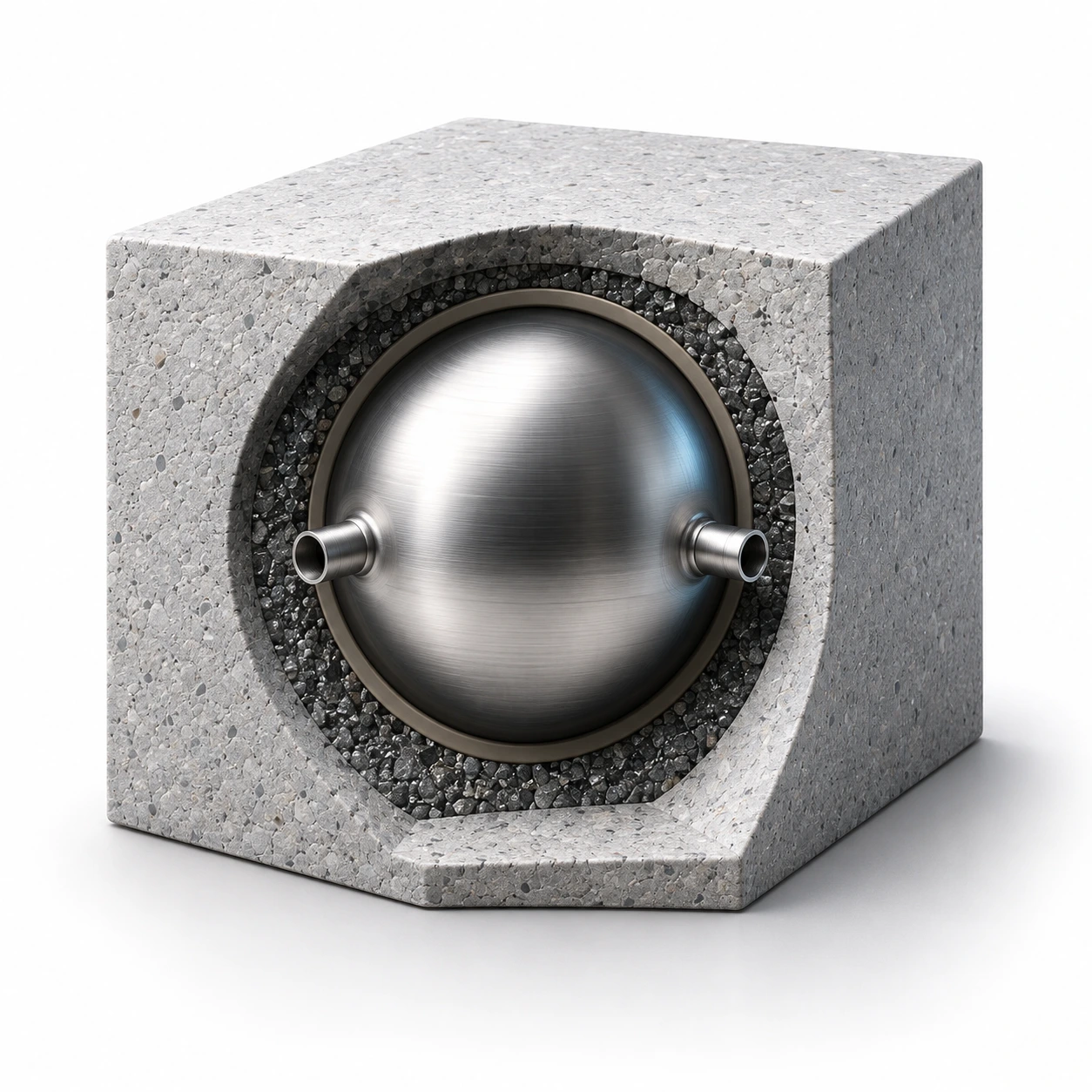
Inside the HEBE Cell
Illustrative concept rendering. Layers are not to scale.
Why underground
Preserves land use and minimizes visual impact.
Add capacity as demand grows.
Underground placement provides protection from extreme weather and impacts.
Designed to support large underground storage networks.
System architecture
Clean energy from renewable generation.
Produces hydrogen using surplus power.
Stores hydrogen underground with HEBE Cells.
Power for industry, transport, and reliable electricity.
Safety philosophy
Materials and design supported by an engineering, testing, and validation pathway.
A 316L liner and high-integrity connections provide the containment architecture.
Underground placement provides natural thermal insulation from ambient temperature swings. Materials are selected for the −253 °C to +40 °C operating range.
Health monitoring and data analytics support long-term confidence.
Company design specifications, subject to engineering validation and applicable certification. Concept illustrations are not to scale.
The future starts below the surface
Connect with HEBE about technology, partnerships, and deployment.